Plumbing Leak Water Damage in Eaton: Wall and Floor Repair
A plumbing leak does not announce itself. You walk into the laundry room at 10pm in Eaton and find a soaked baseboard, a buckled plank, or a brown ring spreading across the ceiling below an upstairs bathroom. The water has already traveled, soaked into framing, and started loading drywall with moisture. Every hour you wait, the repair scope grows.
This guide from Eaton Water Restoration is a technical walkthrough. We built it from the same field protocols our IICRC certified crews run on Eaton jobs every week. Founded in 2018 and BBB A+ accredited, our team responds across Central Indiana with truck mounted extraction, calibrated moisture meters, and structural drying equipment sized to the affected square footage. If we cannot help on a specific scenario, we will tell you directly and point you to the right specialist.
Follow the numbered steps below in order. Do not skip the moisture verification stages. The most expensive mistake homeowners make is closing walls and reinstalling flooring before the cavity reads below 16% moisture content. That single shortcut creates the mold call six weeks later. Read through once, then work the steps with the materials and tools listed at each stage.
What Actually Happens When a Plumbing Leak Soaks Your Walls and Floors
A plumbing leak is different from a storm flood or a sewage backup because it usually starts clean and small, then turns destructive through time and contact. Under the IICRC S500 standard, water from a supply line begins as Category 1, which is sanitary, but the moment it sits inside a wall cavity or under flooring for more than 24 to 48 hours, it can degrade to Category 2 as it picks up materials, dust, and microbial activity. That category shift matters because it changes what can be salvaged and what insurance will cover. A Eaton homeowner who calls Eaton Water Restoration within the first day often keeps their hardwood, their drywall, and most of their trim. A homeowner who waits a week because the leak seemed minor is usually looking at selective demolition, full floor replacement, and the early stages of mold colonization behind paint that still looks fine.
Inside the wall, water follows gravity but it also wicks. Drywall paper acts like a sponge, pulling moisture vertically up to 18 inches above the actual wet zone. Insulation, especially older fiberglass batts common in Eaton homes built before 2000, holds water against framing for weeks. The studs themselves can read 25 to 40 percent moisture content when normal is under 16 percent. If we open the wall and find swollen bottom plates, blackened paper backing, or visible mold colonies, those materials come out. If the framing is sound and we can dry it in place with directed airflow and dehumidification, we do that instead. The decision is made with meters and thermal imaging, not guesswork, and we document every reading so your adjuster has clean numbers to work from.
The type of plumbing involved also shapes what we find. Copper supply lines tend to fail at pinholes near solder joints and spray a fine mist that can saturate a much larger area than the puddle on the floor suggests. PEX failures are usually at fittings and produce steadier streams. Cast iron drain lines that have corroded from the inside often weep slowly for months before any visible sign appears, and by the time a stain shows on a ceiling, the joist bay above it has already been damp through several humidity cycles. Each of these scenarios changes the drying strategy, the demolition footprint, and the conversation we have with your plumber about repairs that need to happen before we close anything back up.
The Wall and Floor Repair Process from Arrival to Final Coat
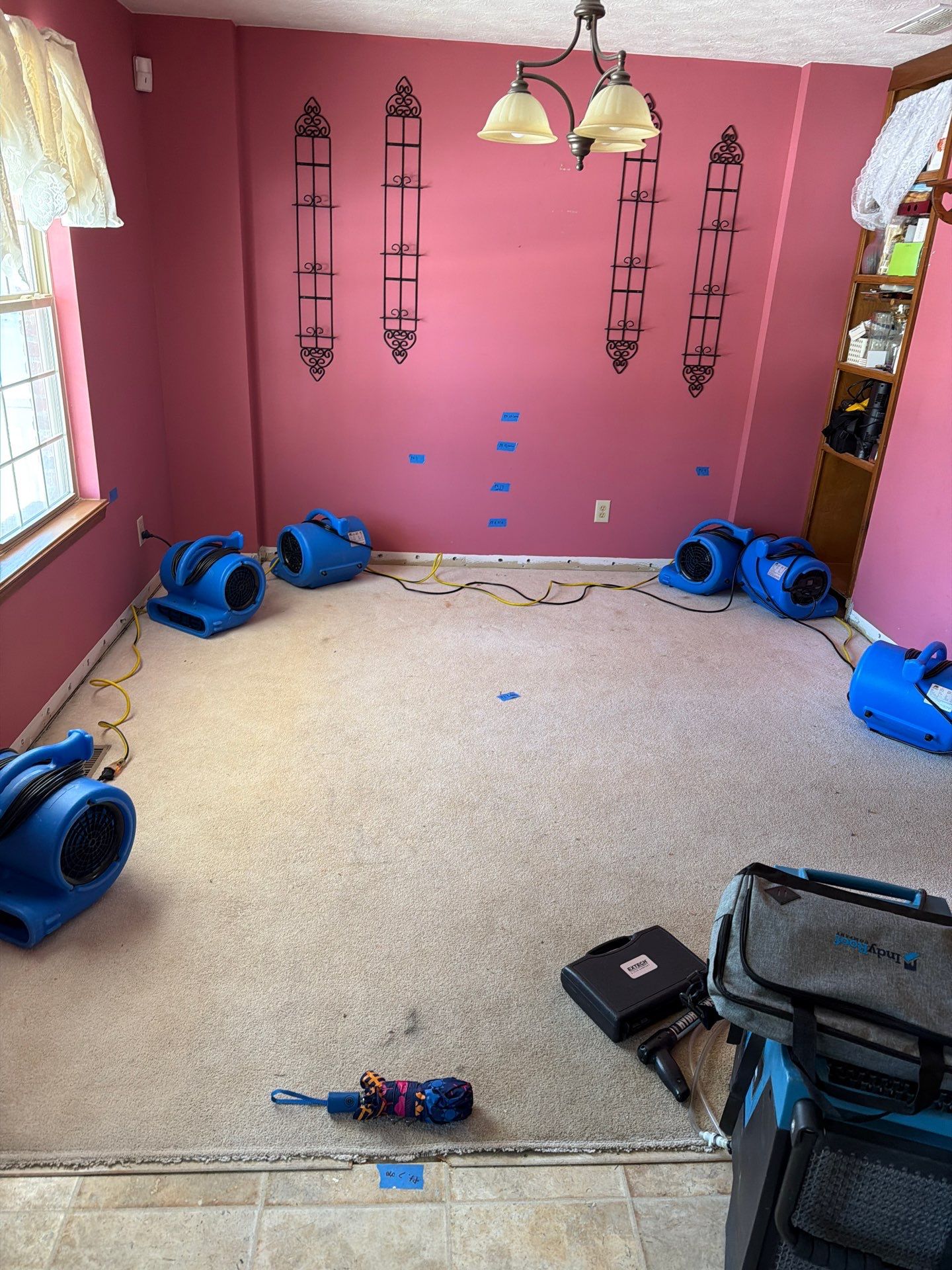
When our crew arrives at your Eaton property, the first 30 minutes are diagnostic. We trace the leak source, shut off water if it has not been done already, and map the moisture footprint with non penetrating meters before we ever cut into anything. A pinhole leak in a copper line behind a kitchen wall behaves differently than a slow drip from a toilet supply, and the drying plan reflects that. From there we move into extraction if there is standing water, set containment if the area is contained enough to benefit from it, and begin structural drying with commercial air movers and low grain refrigerant dehumidifiers sized to the actual cubic footage of wet material. You can read more about how this phase works in our overview of water mitigation services and emergency drying, which covers equipment counts and typical timelines.
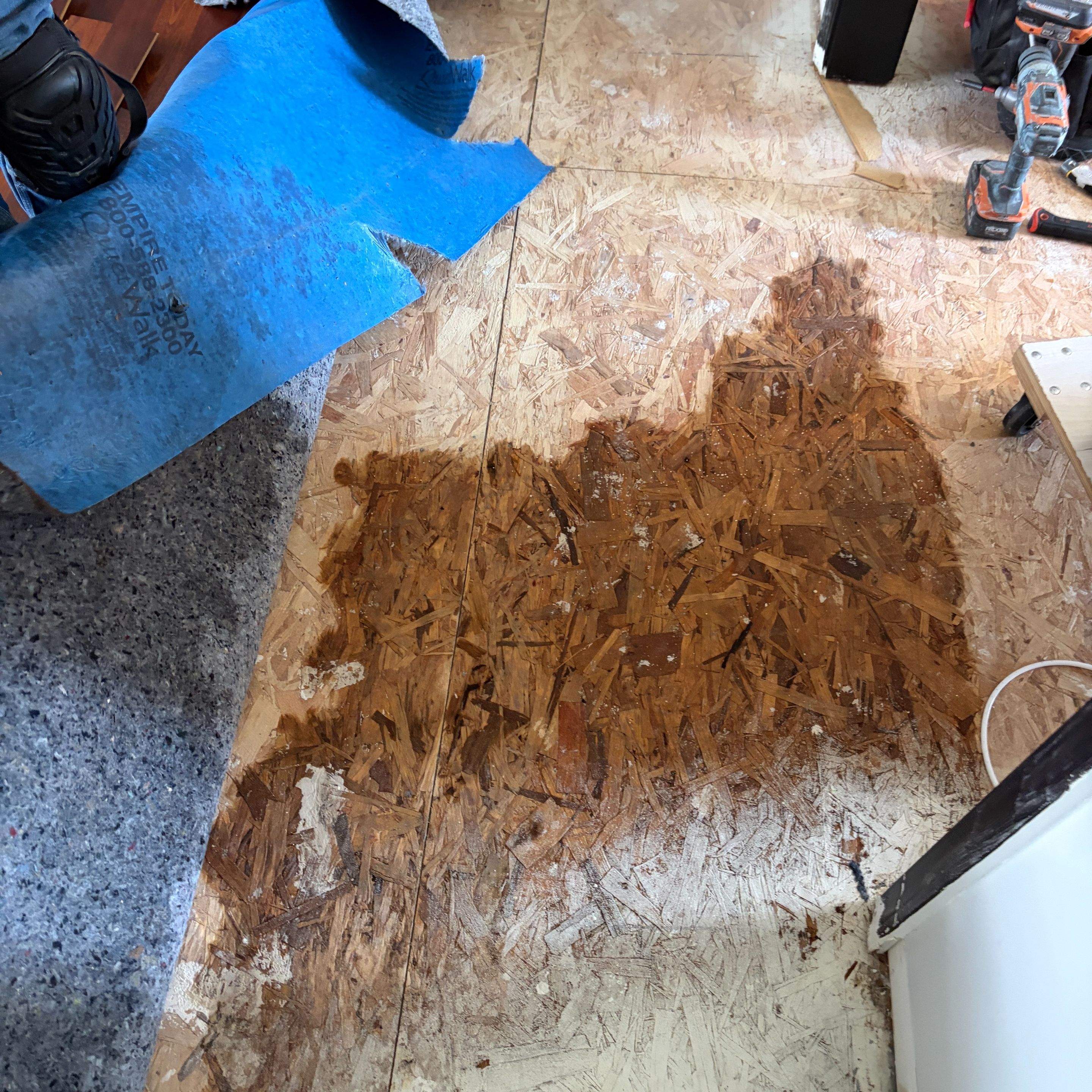
For floors, the repair path depends on the material. Engineered hardwood that has cupped slightly will sometimes flatten with three to five days of aggressive drying and time. Solid hardwood that has crowned or buckled almost always needs replacement of the affected boards plus sanding and refinishing to blend. Laminate is rarely salvageable once water gets under it because the fiberboard core swells permanently. Tile usually survives, but the subfloor and underlayment beneath it may not, and that is where moisture mapping pays for itself. Carpet pad is almost always discarded; the carpet itself can often be cleaned, dried, and reinstalled if we catch it early. For a deeper look at flooring decisions specifically, our guide on hardwood floor water damage and whether to save or replace walks through the visual and meter based criteria we use on site.
Walls follow a similar logic. If drywall has been wet for less than 48 hours and is still structurally intact, we can often dry it in place by removing baseboard, drilling small ventilation holes behind the trim line, and pushing dry air into the cavity. If it has been wet longer, or if the paper is delaminating, we perform a flood cut, removing drywall 12 to 24 inches above the visible damage line. Insulation comes out, framing gets dried and treated if needed, and new drywall, mud, texture, primer, and paint follow once moisture readings hit equilibrium with the rest of the home. Matching texture is its own small craft, particularly in older Eaton homes where knockdown or orange peel patterns have softened with decades of repainting, and our finishers spend real time blending the patch so it disappears into the surrounding wall rather than announcing itself. For leaks that hid for weeks before showing themselves, our breakdown of water damage behind walls and hidden leak detection explains how we find the full extent before quoting repair.
When to Stop and Call Eaton Water Restoration
If your readings stall above target moisture for 48 hours, if you smell musty odor inside a cavity, or if the leak ran longer than 8 hours before discovery, stop the DIY approach. Trapped moisture inside framing turns into a mold remediation project that costs 3 to 5 times the original drying scope. Eaton Water Restoration runs 24 7 emergency response across Eaton and Central Indiana, and we will tell you honestly whether your situation needs a full crew or just a moisture verification visit. Call us, send photos, and we will walk you through your next step.
Cost, Insurance, and What to Expect in Eaton
Most plumbing leak restoration jobs in Eaton fall between 2,800 and 9,500 dollars for mitigation and repair combined, depending on how far the water traveled and how much finish work is needed. A contained under sink leak caught in 24 hours might run 1,200 to 2,000 dollars. A second floor supply line that ran for a weekend and damaged ceilings below can pass 15,000 dollars once flooring, drywall, paint, and cabinetry are factored in. Homeowners insurance typically covers sudden and accidental discharge, which most plumbing leaks qualify as, though gradual seepage is often excluded. We document everything with photos, moisture maps, and daily drying logs so your claim has the evidence it needs the first time.
Timelines tend to surprise people more than costs do. Drying alone runs three to five days in most cases, and reconstruction can take another one to three weeks depending on material lead times, paint cure schedules, and how much cabinetry or trim work is involved. Eaton Water Restoration stages the job so that drying, demolition, and rebuild flow into one another without long gaps, and we keep you informed at each handoff so there is never a day where you wonder what is happening in your home. By the time the final coat of paint goes on and the baseboards are reset, the goal is simple: the room should look like the leak never happened, and the readings behind the wall should prove it.
Frequently Asked Questions
How long does it take to dry walls and floors after a plumbing leak?
Most Cat 1 plumbing leak jobs in Eaton dry in 3 to 5 days with proper air movers and dehumidifiers. Cat 2 and Cat 3 jobs run longer because materials are removed before drying begins.
Will my insurance cover plumbing leak water damage?
Sudden and accidental leaks are typically covered. Slow leaks that went unnoticed for weeks or months are often excluded as maintenance. Eaton Water Restoration documents the loss in language adjusters expect to see.
Can you save my hardwood floors after a leak?
Sometimes. If we get drying mats on cupped hardwood within 24 to 48 hours, salvage rates are reasonable. Once boards crown, buckle, or delaminate, replacement is usually the right call.
Do you have to cut my drywall?
Not always. If moisture readings show the wall is drying within target and there is no insulation behind it, we can often dry in place. Insulated walls almost always need controlled cuts to remove wet batting.
How fast can Eaton Water Restoration respond in Eaton?
We dispatch 24/7 across Eaton and Central Indiana with same-day arrival for active leaks. Call our emergency line and a technician will be on the way with extraction and drying equipment.
Have a restoration question?
Our IICRC certified Eaton crew is ready to help. Free assessments, written scopes, no pressure.